Here is a frustration almost every homeowner runs into: you are standing in a showroom holding a small sample, trying to imagine a whole kitchen from a piece the size of a coaster. With a heavily patterned stone, that little square can look overwhelmingly busy. With a high-movement surface like Viatera Aria, you can hit the opposite problem — the sample looks almost plain, and you completely miss the sweeping marble-like drama that only reveals itself across a full slab. If you have been on the fence about Aria because the sample “didn’t do much” for you, this guide explains what you are actually looking at, who it suits, and what it costs to put in a Central Ohio kitchen.
What is Viatera Aria?
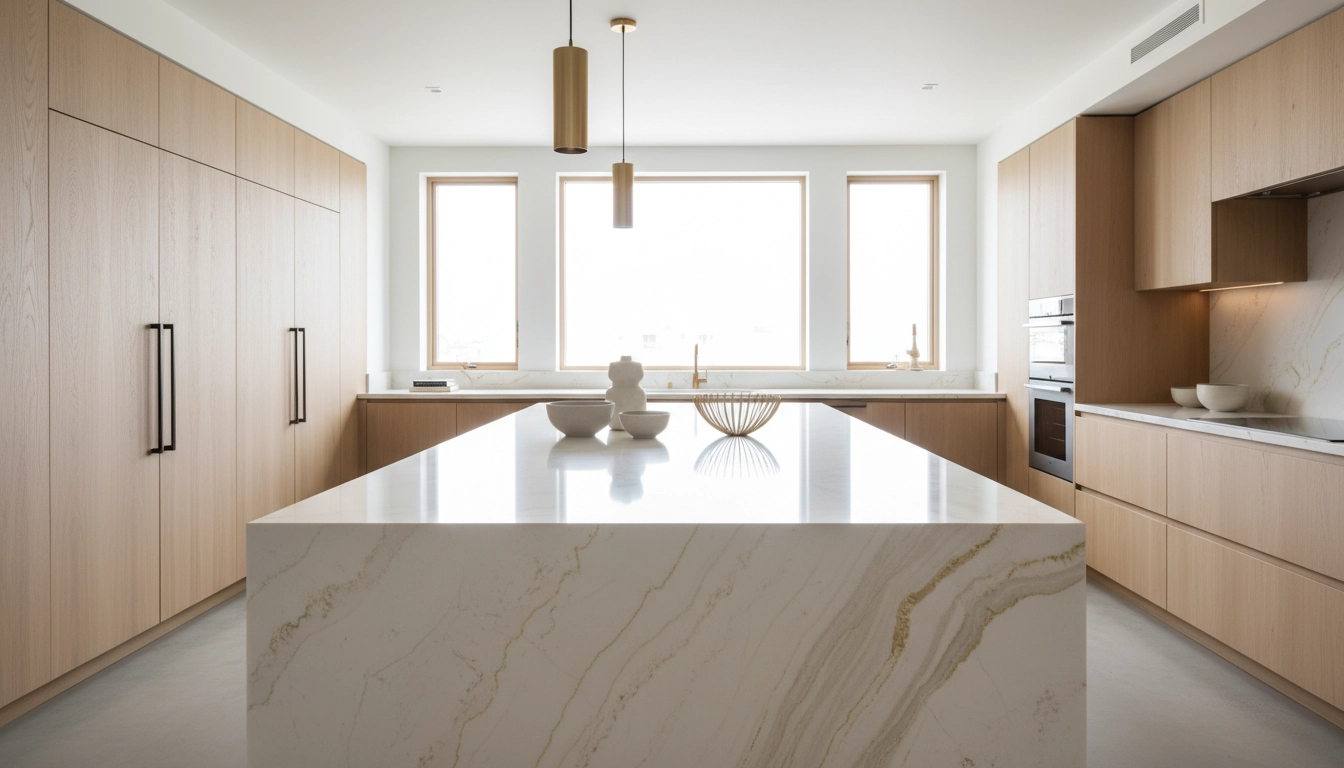
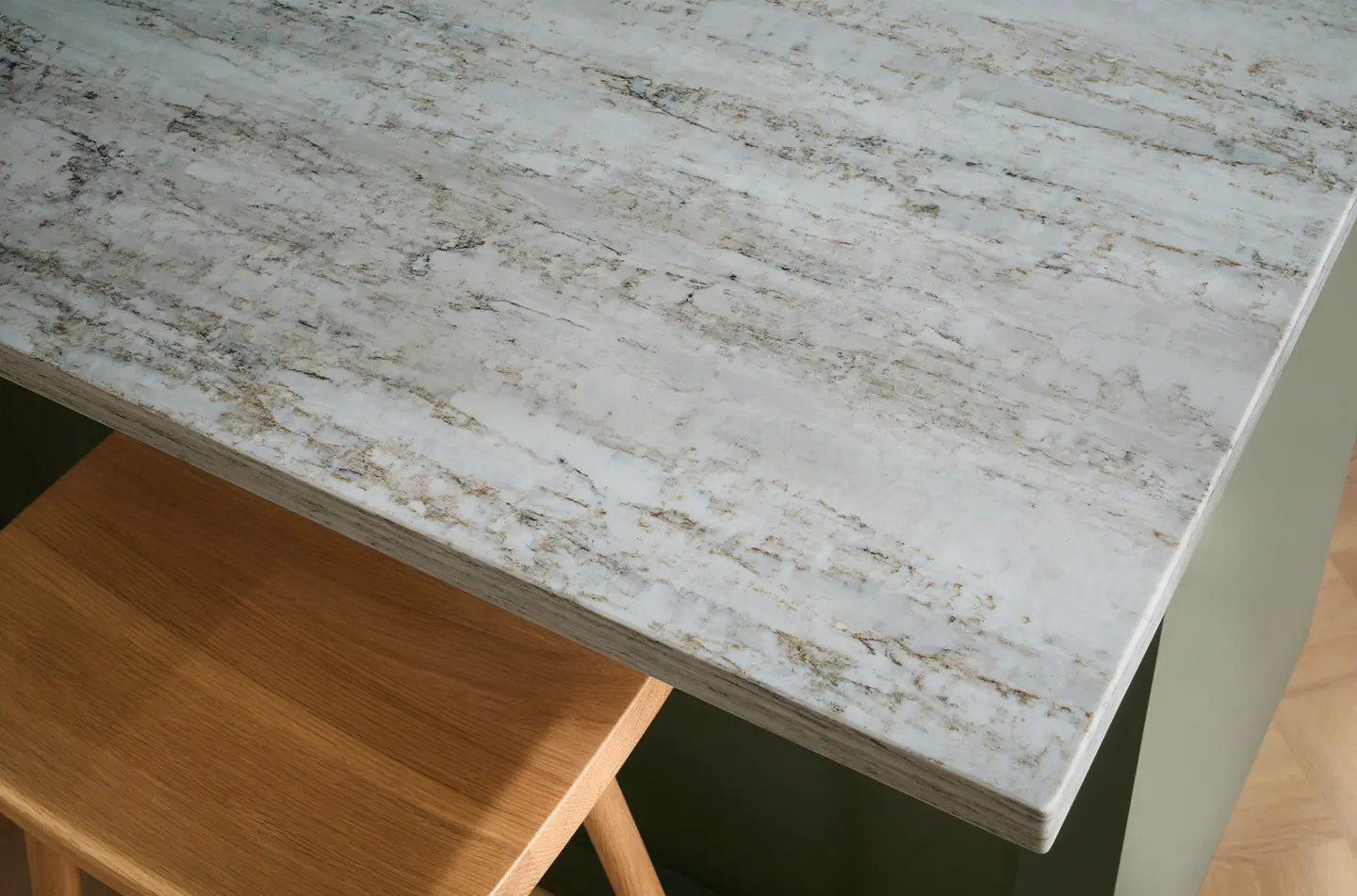
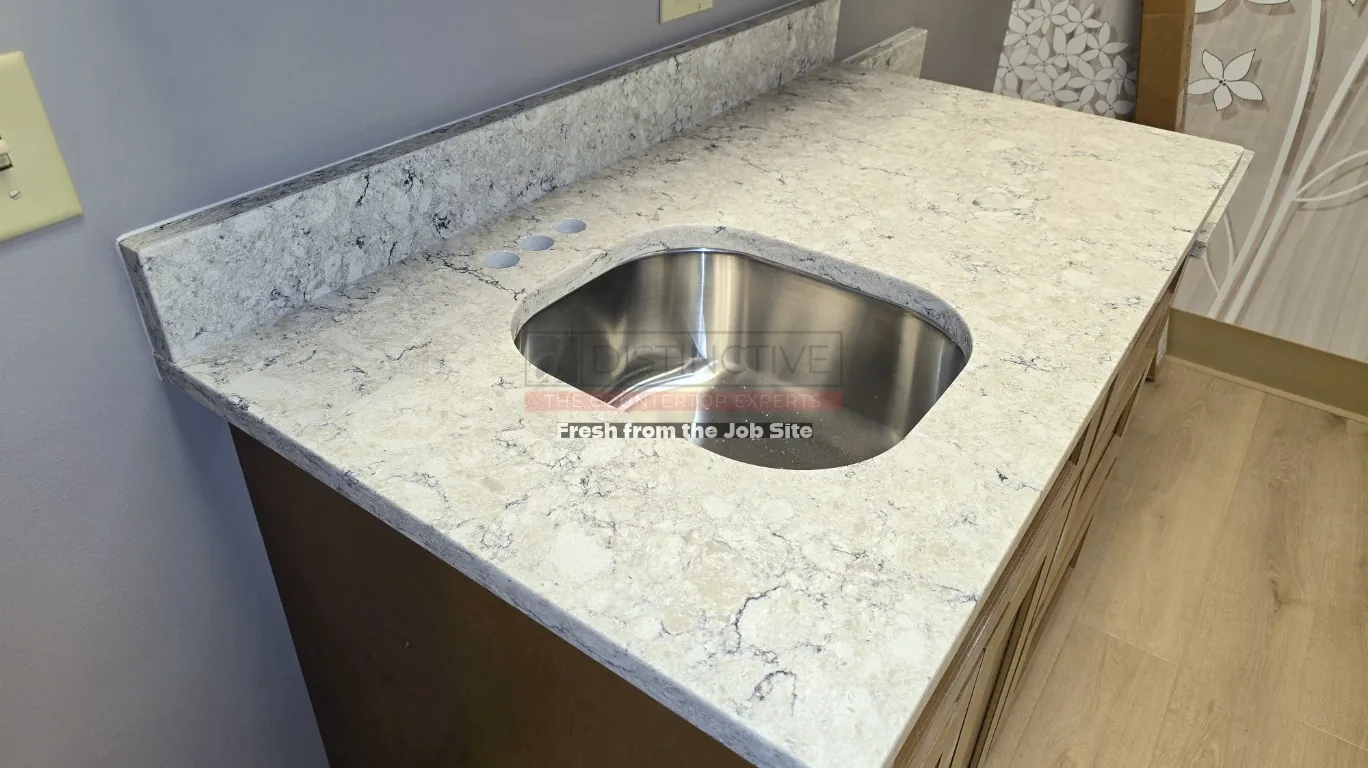
Aria is an engineered quartz from Viatera, the quartz line manufactured by LX Hausys. The design pairs a light alabaster-and-creamy-eggshell background with intricate, high-contrast black marbling — and it is a high-movement pattern, meaning the veining shifts and builds across the slab rather than repeating evenly. LX Hausys notes outright that Aria “exhibits increased movement and variation of color and pattern which cannot be fully recognized on some samples.” That single line is the most useful thing to know before you choose it: a tiny sample genuinely undersells this stone, which is why seeing a full slab matters more for Aria than for a consistent, low-variation color.
On the practical side, Aria shares the Viatera fundamentals: up to 93% natural quartz, non-porous, never needs sealing, available in 2cm and 3cm thicknesses, and backed by a 15-year limited residential warranty (registration required). It is NSF-certified for food contact and GREENGUARD-certified for low emissions. For more on how quartz performs as a material overall, our quartz countertops page goes deeper.
The marble look without the marble maintenance
For a lot of homeowners, the appeal of Aria is simple: it captures the timeless elegance of natural marble — that pale background broken by dramatic dark veining — without inheriting marble’s headaches. Real marble is porous and notoriously prone to etching. A splash of lemon juice, a pool of tomato sauce, or an overturned glass of red wine can leave a permanent dull mark, and the stone needs regular sealing to stand a chance. Aria sidesteps all of that. Because it is non-porous engineered quartz, it does not require sealing, and a spilled glass of wine at a holiday party or a forgotten coffee ring on a Monday morning usually wipes away with mild soap and water. If you have always wanted the marble look but knew you would never keep up with the upkeep, this is the trade-off Aria is designed to solve. (If you are still torn between the two looks, our marble countertops overview lays out where natural marble still wins.)
Does a dramatic white-and-black quartz fit a Columbus home?
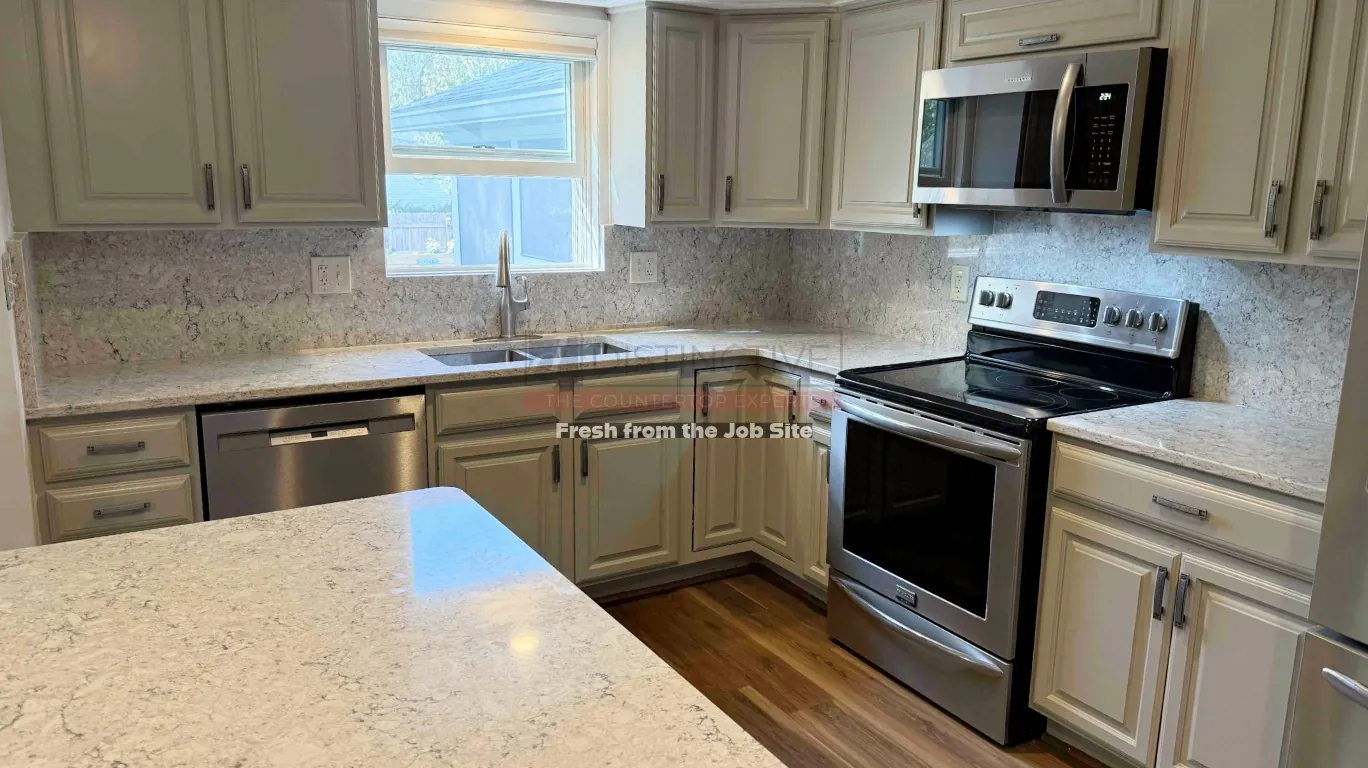
Columbus and its suburbs cover a wide range of styles — the historic character of German Village, the family-scaled new builds out in Dublin and Westerville, the mix of mid-century and modern in between. Aria is flexible enough to land in most of them because the light base keeps a kitchen feeling bright while the dark veining adds the visual interest. A few pairings that tend to work:
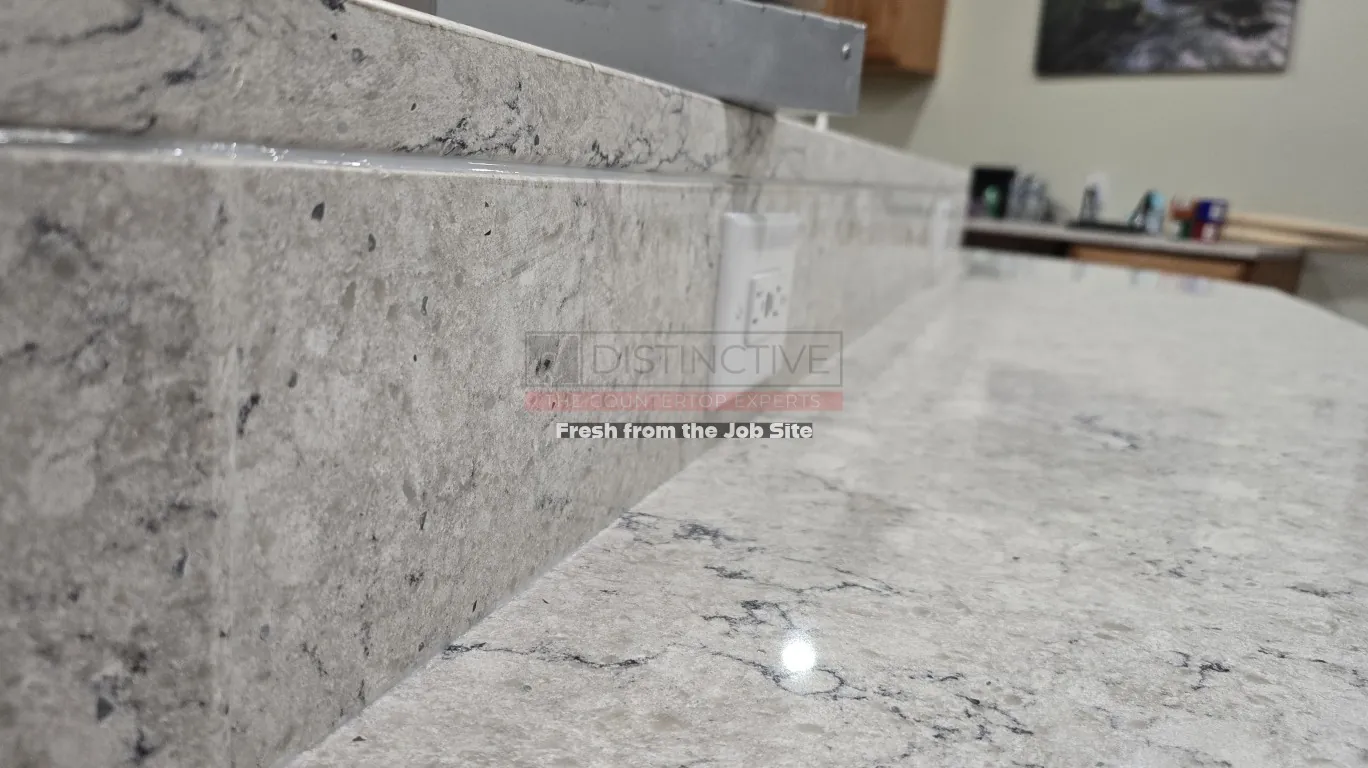
- Crisp white or light-gray cabinets for a clean, contemporary kitchen where Aria’s veining becomes the detail that keeps the room from feeling flat.
- Natural wood cabinetry — oak, walnut — where the warm-leaning base softens the contrast of the black veining.
- A bold island in deep navy or forest green, with Aria on the perimeter as the bright counterweight.
One more Central Ohio consideration: our long stretches of overcast winter days. A light, reflective background like Aria’s helps bounce both daylight and interior lighting around the room, which keeps the kitchen from feeling dim and closed-in during the grayer months.
The honest caveats
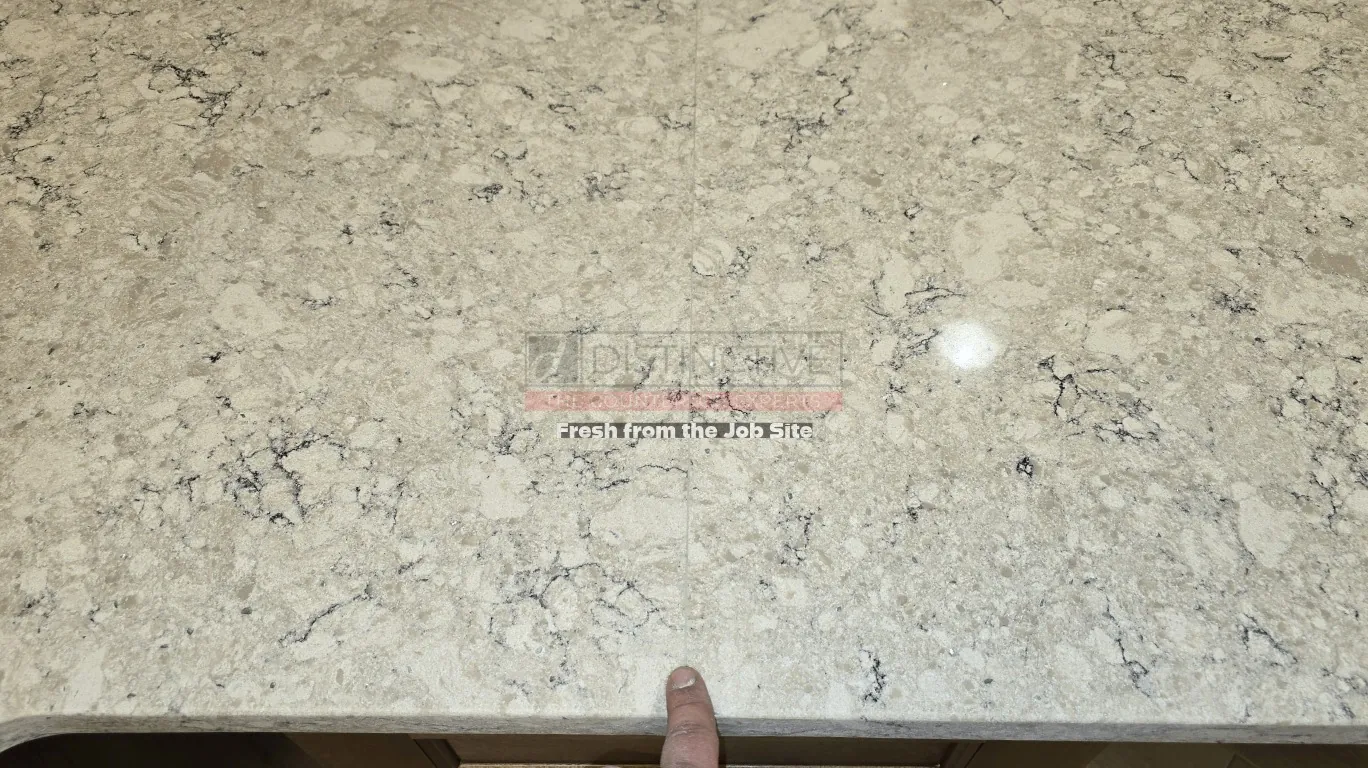
Two things to keep in mind. First, because Aria is a high-movement pattern, layout matters more than usual. Where the bold veining falls on your island versus your perimeter, and how it flows across a seam, makes a real visible difference — this is a fabrication-and-layout decision, not something you can judge from a sample. A shop that lets you see the actual slab and talks through slab placement will get you a far better result. Second, the universal quartz caveat: Aria is heat-resistant but not heat-proof. The resin binding the quartz can scorch under a pan straight off the burner, so trivets and hot pads are a must. That is true of every quartz brand, not a knock on Aria specifically.
What does Aria cost installed in Columbus?
In Ohio, quartz countertops generally run between $60 and $120 per square foot installed, and a marble-look design like Aria typically falls within that range. Your final figure comes down to total square footage, your edge profile (an eased edge is usually included; ogee, bullnose, or a waterfall edge costs more), the number of sink and cooktop cutouts, and whether you want a matching backsplash. With a high-movement stone, it is also worth asking how the shop will position the slab so the best veining lands where you will see it. For a fuller cost breakdown, see our guide to quartz countertop costs in Ohio, or request a quote for your specific kitchen.
Aria vs. your other marble-look options
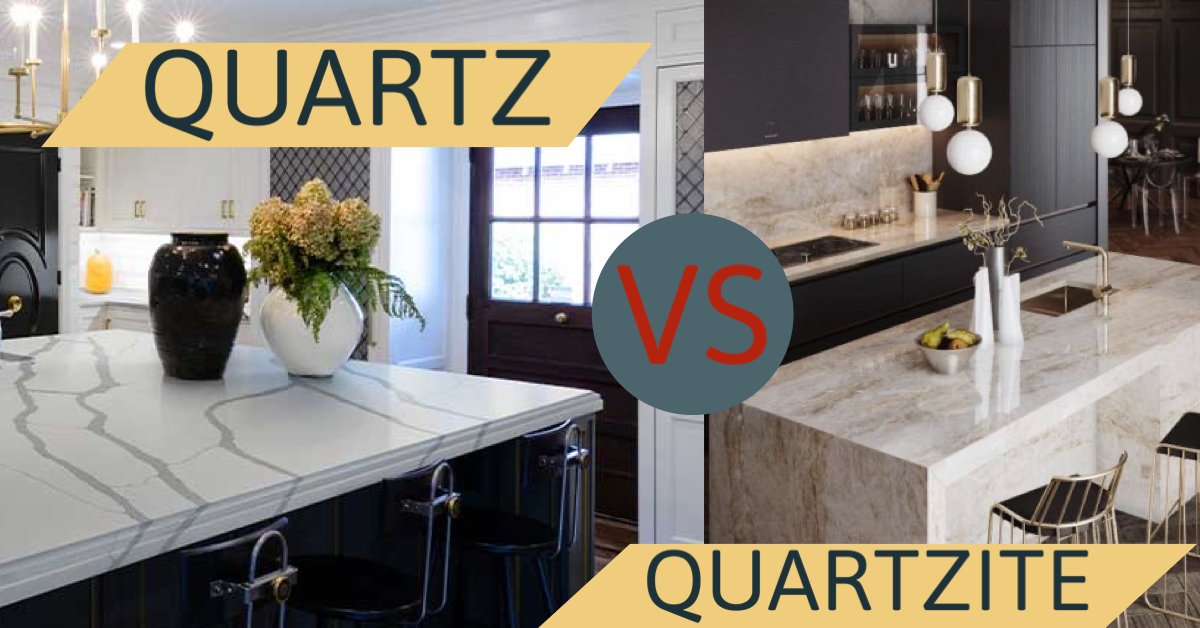
Aria is far from the only quartz chasing the marble look, so two comparisons help you place it. If you are deciding between quartz and natural stone in general, our quartz vs. granite comparison covers the durability and maintenance trade-offs. And if your heart is set on genuine marble veining and you are willing to maintain it, the marble option is there — just go in clear-eyed about sealing and etching. For most busy households that want the look and not the labor, a quartz like Aria is the sensible middle.
See a full Aria slab before you decide
This is the one color where we would gently insist: do not choose Aria from a sample. The whole character of the stone lives in the full-slab movement that a small piece cannot show. At Distinctive Kitchen, Columbus’s countertop fabricator since 1994, we handle templating, fabrication, and installation in-house — which means we can walk you through slab placement so the veining works for your layout. Come visit our showroom to see Viatera Aria in person, or reach out with any questions.
Frequently asked questions about Aria quartz
Is Viatera Aria a quartz or natural stone?
It is engineered quartz from Viatera (LX Hausys), made from up to 93% natural quartz with resins and pigments. It is not natural marble, which is why it never needs sealing.
Why does Aria look plain on a small sample?
Aria is a high-movement design. The manufacturer states its pattern variation cannot be fully recognized on some samples, so a small piece undersells the sweeping veining you see across a full slab. Always view a full slab.
Does Aria need sealing?
No. As non-porous engineered quartz, Aria never needs sealing. Day-to-day care is just mild soap and water.
Is Aria a good substitute for marble?
Yes, if you want the marble look without the upkeep. Aria delivers the pale-background-with-dark-veining aesthetic but, unlike porous marble, resists stains and etching and requires no sealing.
How much does Aria cost installed near Columbus?
Roughly $60 to $120 per square foot installed, depending on square footage, edge profile, cutouts, and backsplash. Request a quote for an exact number on your layout.