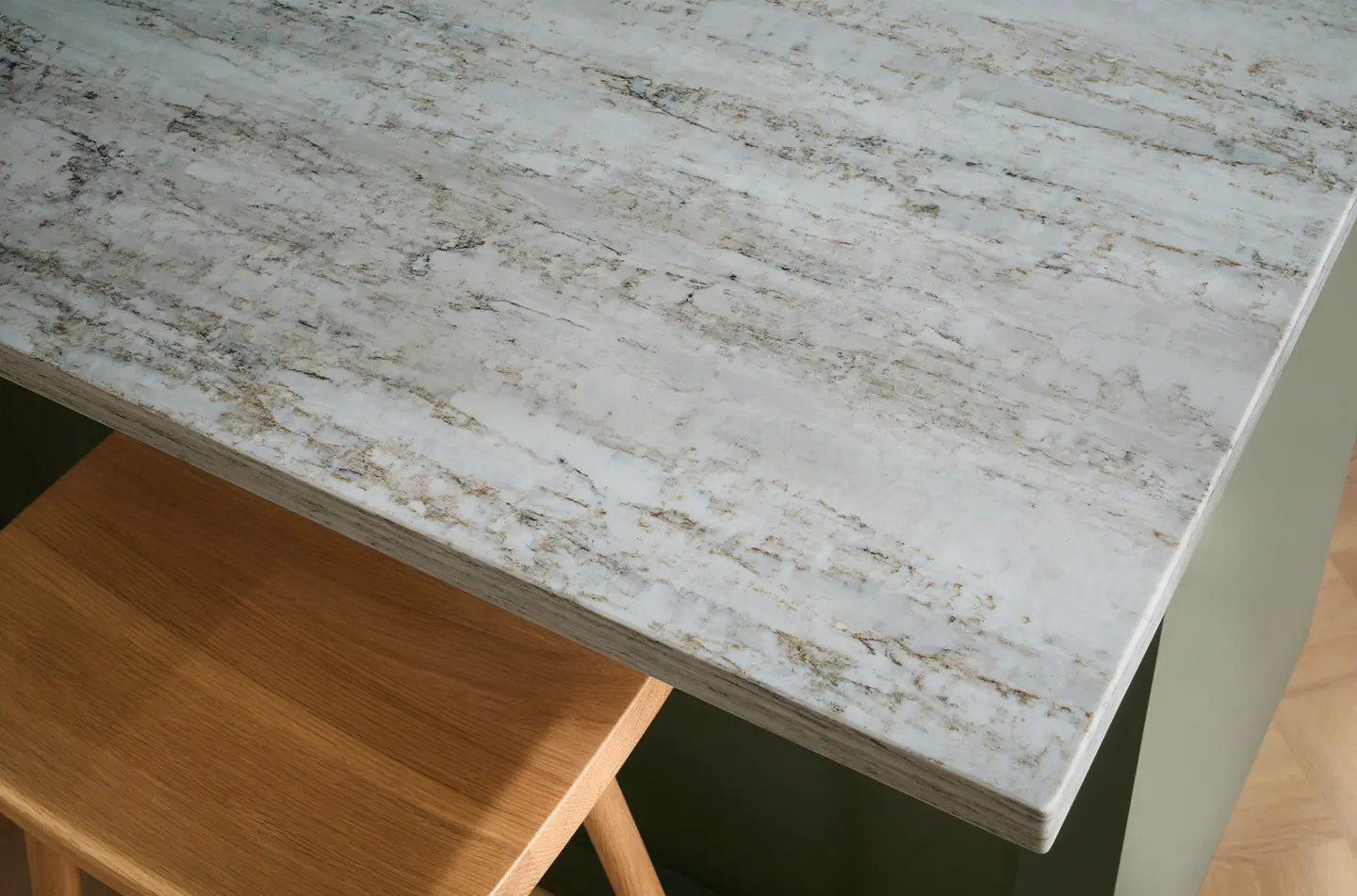
Most homeowners walk into a showroom certain they want a clean white countertop — and then stop in front of a slab that looks like a slice of an Italian mountainside. Viatera Apennines tends to be that slab. It is not a quiet, blend-into-the-background choice, and that is exactly why people either fall hard for it or hesitate. If you have been wondering whether a dramatic, golden-brown-and-charcoal quartz can actually work in an everyday Central Ohio kitchen — without feeling overwhelming a year from now — this guide walks through what Apennines really is, where it shines, where it can clash, and what it costs to install around here.
What exactly is Viatera Apennines?
Apennines is an engineered quartz surface from Viatera, the quartz line made by LX Hausys. Like the rest of the Viatera collection, it is built from up to 93% natural quartz combined with resins and colorfast pigments, which makes it non-porous, highly scratch- and stain-resistant, and — unlike natural granite or marble — something you never have to seal. It is named after the Apennine mountain range that runs down the spine of Italy, and the design leans into that story: warm golden-brown tones in the background, broken up by intense dark-gray veining that moves across the slab like a ridgeline.
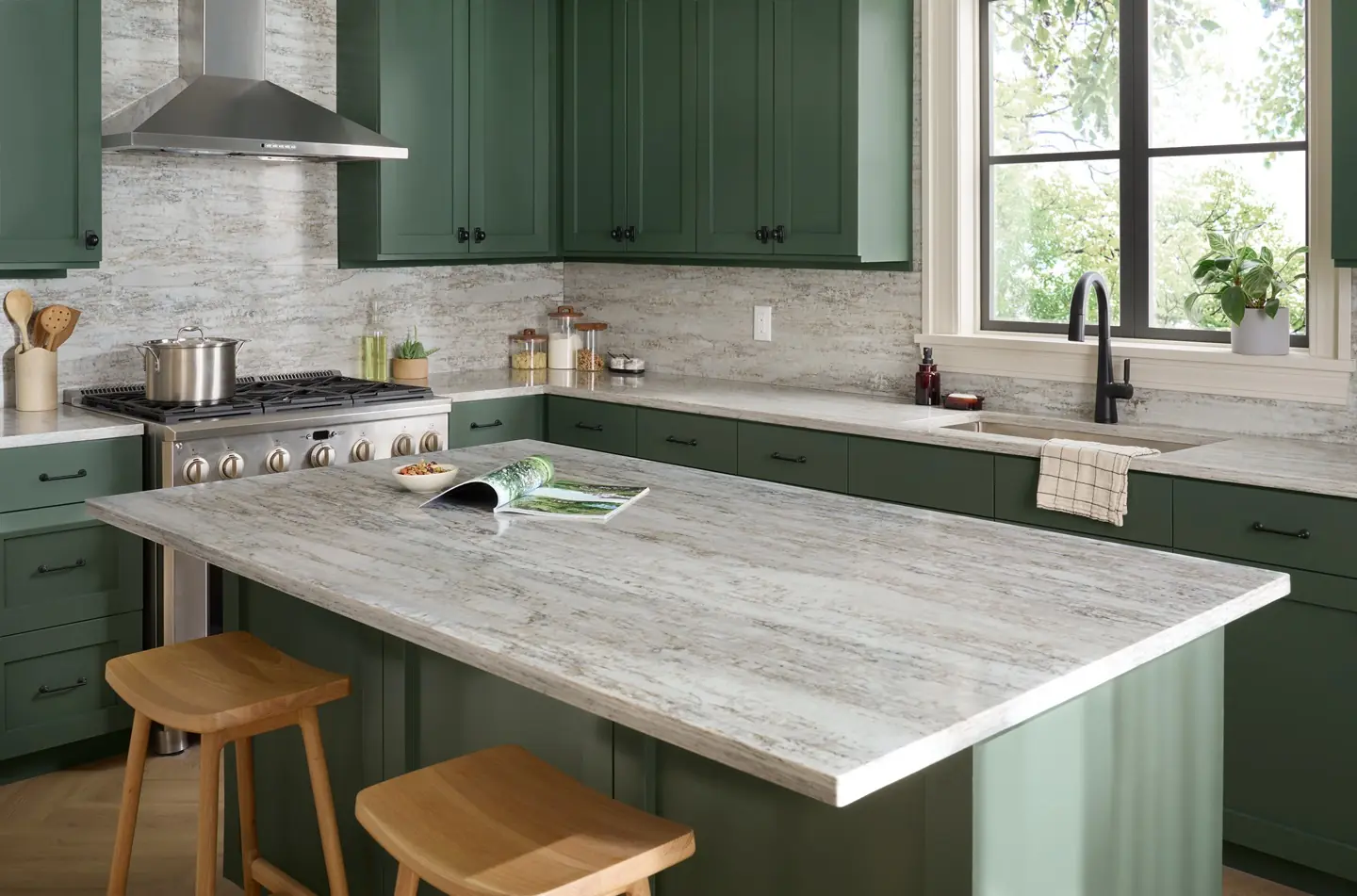
The practical specs matter when you are planning a real kitchen. Viatera is produced in 2cm and 3cm thicknesses, comes in jumbo slab sizes large enough to limit seams on most layouts, and carries a 15-year limited residential warranty (registration required). It is also NSF-certified for food safety and GREENGUARD-certified for low chemical emissions — worth knowing if indoor air quality is on your radar. For a fuller look at how quartz behaves day to day, our quartz countertops overview covers the material in depth.
Will a bold pattern still feel right in five years?
This is the worry we hear most often, and it is a fair one. A heavily veined, high-contrast surface is a bigger commitment than a plain white quartz. Here is the honest way to think about it.
Apennines reads as warm rather than trendy. Its golden-brown base is rooted in natural-stone tones that have been used in kitchens for decades, so it is far less likely to date the way a sharp, of-the-moment color might. The thing to watch is balance: because the slab carries so much visual energy, the rest of the room generally works best kept calm. Think simple cabinet door styles, restrained hardware, and a backsplash that supports the stone instead of competing with it. When Apennines is the one loud element in an otherwise quiet room, it tends to age gracefully. When it is surrounded by other busy patterns, it can start to feel like a lot.

Where Apennines genuinely shines
A few situations where this surface earns its keep:
- Warming up wood-toned kitchens. If you have natural oak, walnut, or hickory cabinetry — common in many Columbus-area homes — the golden-brown in Apennines echoes the wood grain instead of fighting it, while the gray veining keeps things from feeling dated. It is a way to look current without ripping out cabinets you actually like.
- Beating the gray-winter slump. Anyone who has lived through a Central Ohio January knows the stretch of overcast days that drains the color out of a room. Cool, stark-white counters can read as clinical under that light. The earthy warmth of Apennines does the opposite, holding onto ambient light and keeping the kitchen feeling inviting through the gloomier months.
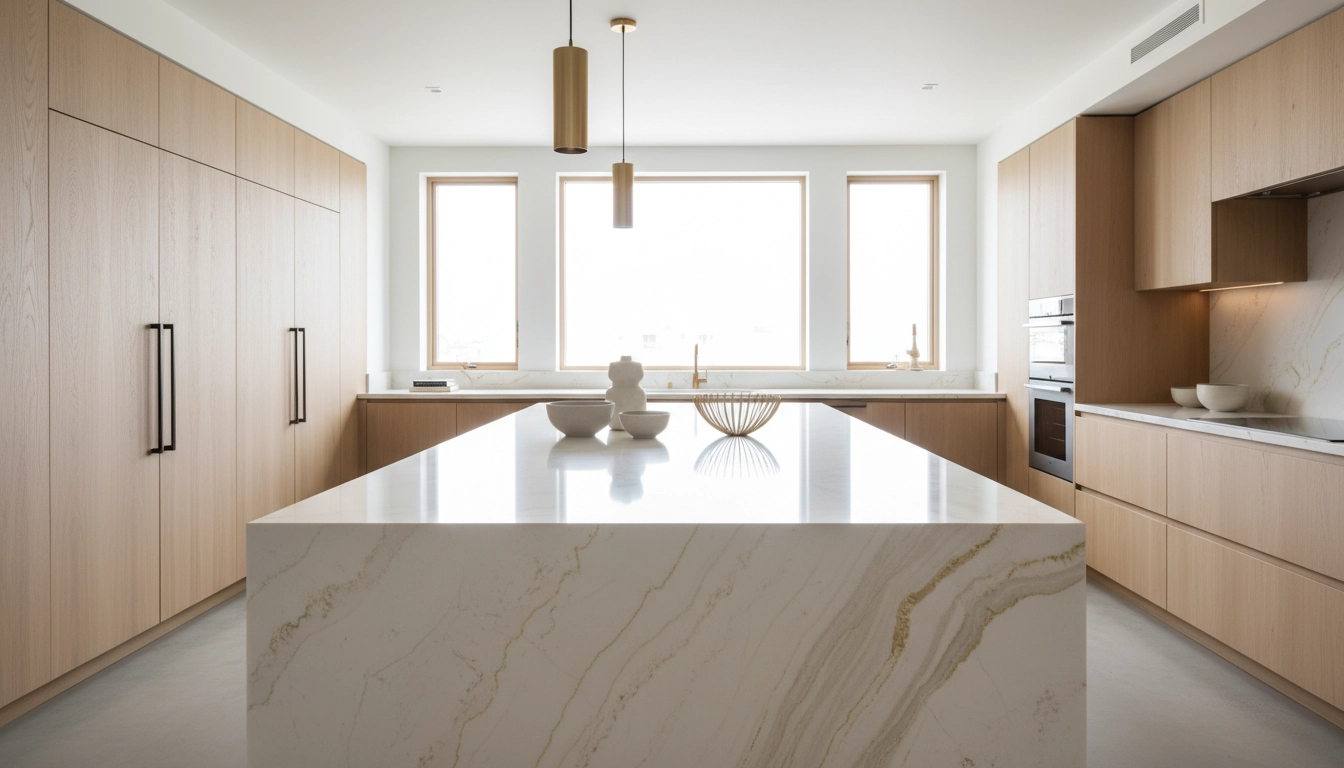
- Islands and feature walls. Because the pattern is the point, Apennines is a strong candidate for a kitchen island or a waterfall edge, where the veining can run uninterrupted and become the room's focal point.
Where it can go wrong — and how to avoid it
First, heat: like all quartz, Apennines is heat-resistant, not heat-proof. The resin that binds the quartz can scorch or discolor under a pan straight off the burner, so a trivet is non-negotiable. This is true of every quartz on the market, not a flaw specific to this color. Second, pattern matching at the seams. With a slab this expressive, a sloppy seam where the veining doesn't line up is glaringly obvious. This is entirely a fabrication issue, not a material one — which is why who cuts your slab matters as much as which slab you pick.

What does Apennines cost to install in Columbus?
In Ohio, quartz countertops typically run between $60 and $120 per square foot installed, and Apennines, as a mid-to-upper Viatera design, generally sits within that band. Your final number depends on the usual factors: total square footage, edge profile (a standard eased edge is usually included, while ogee, bullnose, or a waterfall edge adds cost), the number of sink and cooktop cutouts, and whether you are adding a matching backsplash. A dramatic pattern like this one also rewards a fabricator who will lay out the slab to position the best veining where you will see it most — a detail worth asking about. For a deeper breakdown, see our guide on quartz countertop costs in Ohio, or skip ahead and request a quote for your exact layout.
How Apennines compares to your other options
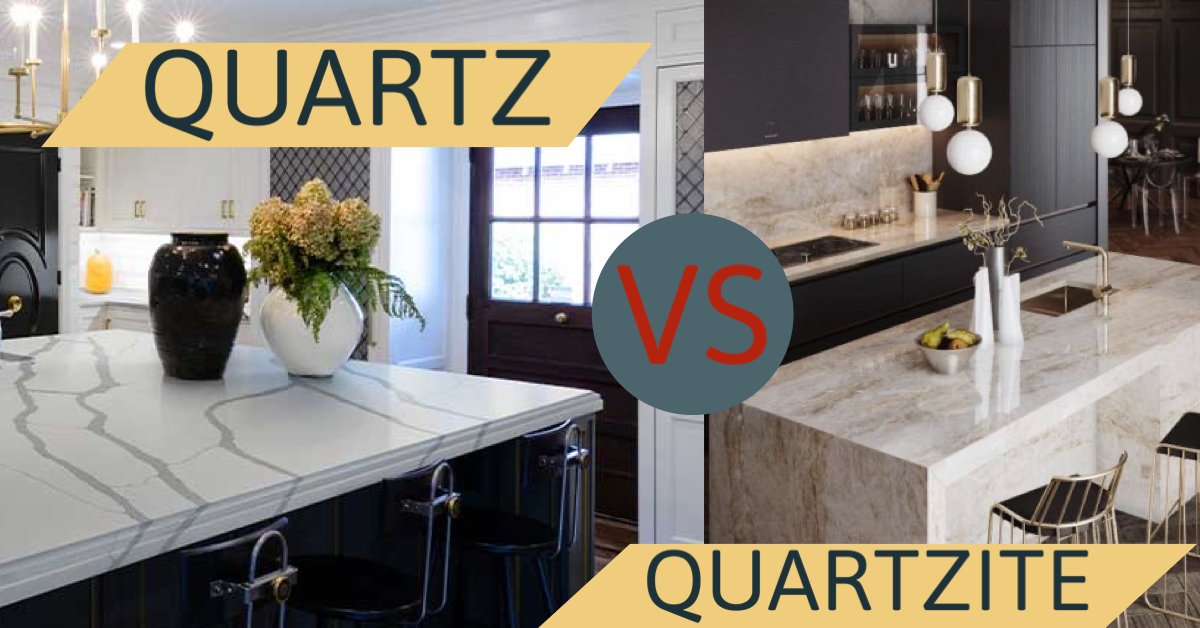
If you love the drama of Apennines but are weighing it against natural stone, a couple of comparisons help. Against granite, quartz like Apennines wins on consistency and zero sealing, while granite offers genuinely one-of-a-kind slabs — our quartz vs. granite breakdown lays out the trade-offs. If what draws you to Apennines is its movement and veining, you might also look at quartzite, a natural stone prized for dramatic patterning; just know it has different maintenance needs. The short version: if you want bold looks plus low upkeep, an engineered quartz like Apennines is hard to beat.

See it in person before you commit
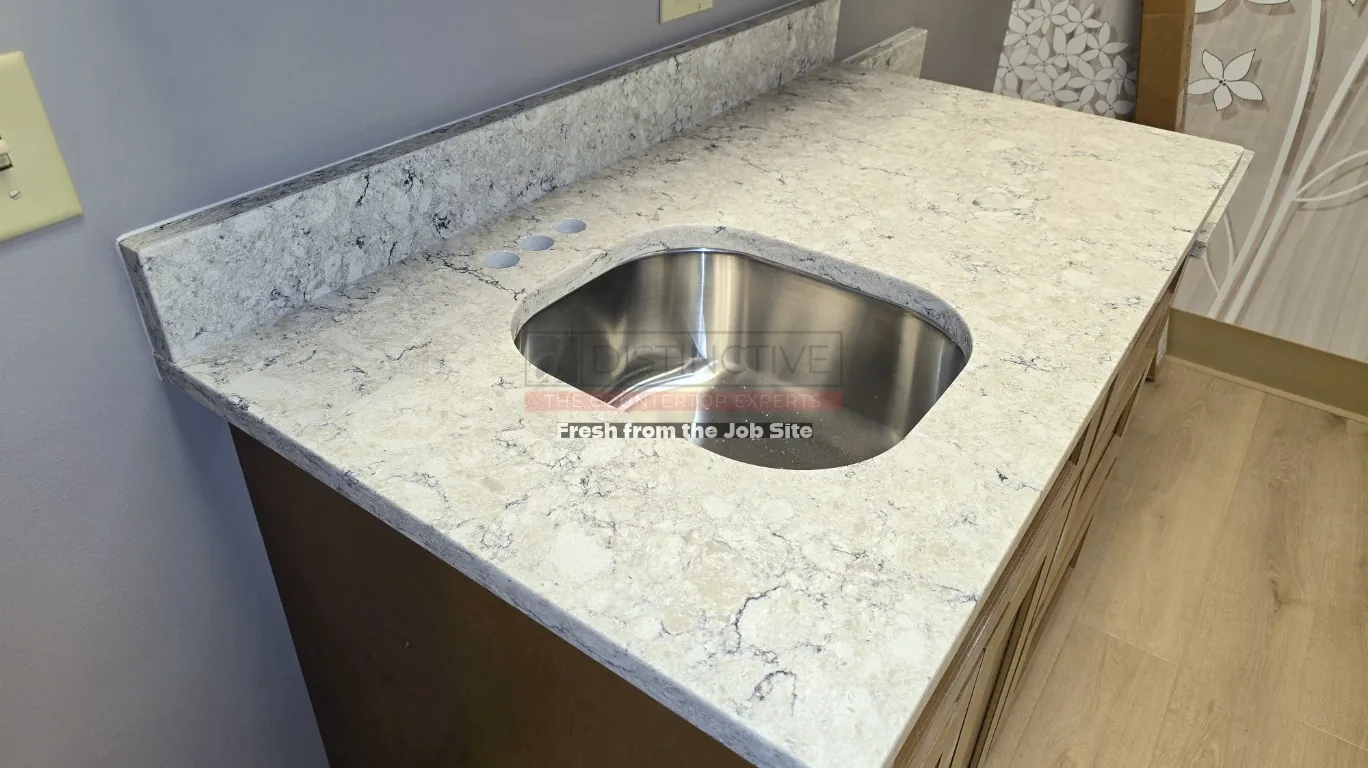
Photos genuinely do not do a slab like this justice — the depth of the veining and the way the golden tones shift under different lighting only really land in person. That is doubly true for a statement surface, where you want to see a full slab rather than a 3-inch sample before you decide. At Distinctive Kitchen, we have been Columbus's countertop fabricator since 1994, and we handle templating, fabrication, and installation in-house, which is exactly what a high-movement pattern like Apennines needs to come out right. You are welcome to visit our showroom to see Viatera slabs for yourself, or get in touch with any questions.
Frequently asked questions about Apennines quartz
Is Viatera Apennines a quartz or a granite?
It is an engineered quartz, made by Viatera (LX Hausys) from up to 93% natural quartz blended with resins and pigments. It is not a natural stone, which is why it never needs sealing.
Does Apennines need to be sealed?
No. Because it is non-porous engineered quartz, Apennines never requires sealing. Routine care is just warm water, mild dish soap, and a soft cloth.
Can I put hot pans directly on Apennines?
No. Quartz is heat-resistant but not heat-proof — direct contact with a hot pan can scorch or discolor the resin. Always use a trivet or hot pad.
Is a bold pattern like Apennines hard to keep looking timeless?
Its warm, natural-stone-inspired tones age better than sharply trendy colors. The key is keeping the surrounding finishes calm so the countertop stays the single focal point rather than one of many busy elements.
How much does Apennines cost installed in the Columbus area?
Expect roughly $60 to $120 per square foot installed, depending on square footage, edge profile, cutouts, and backsplash choices. Request a quote for an exact figure on your layout.