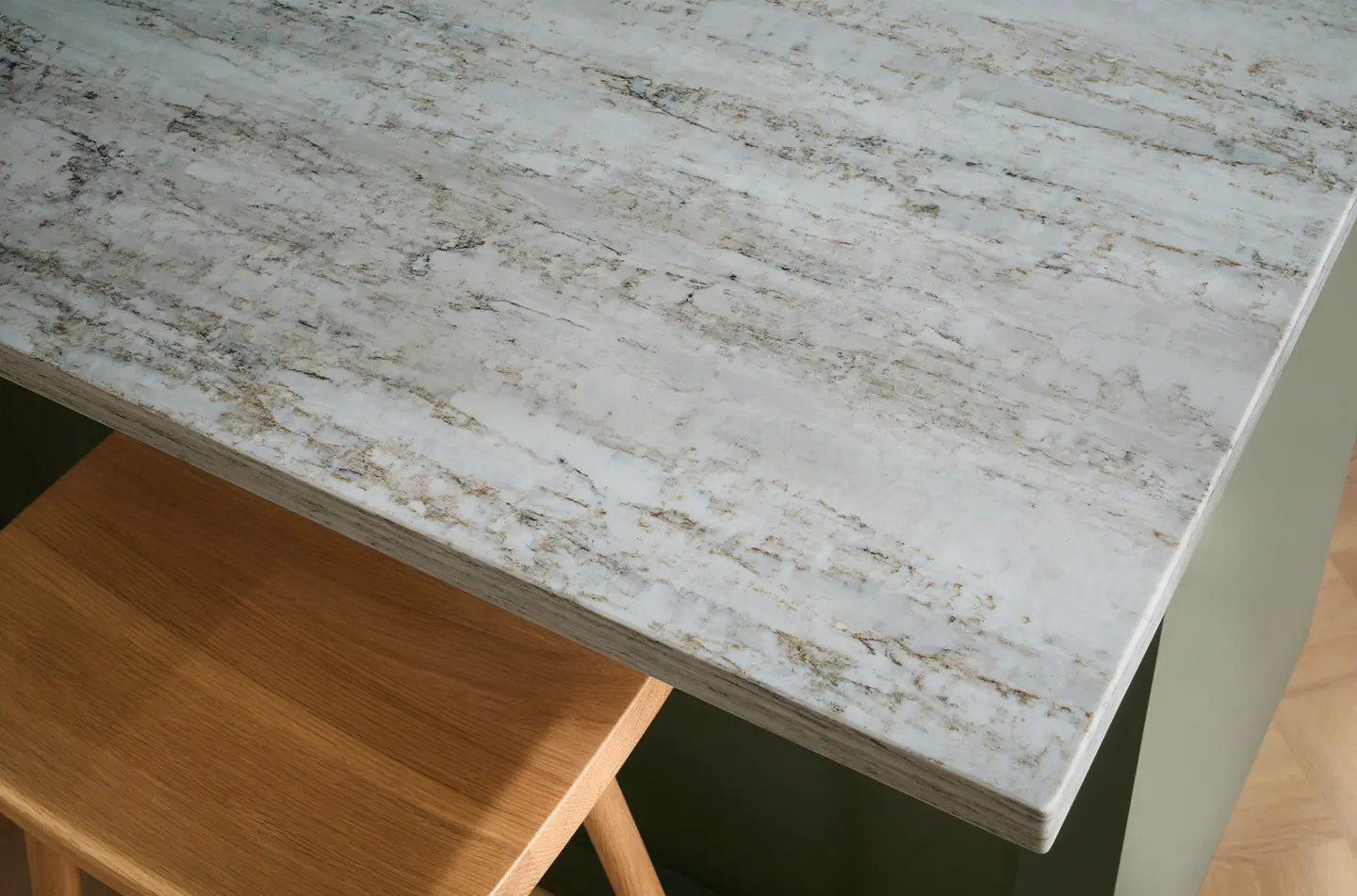
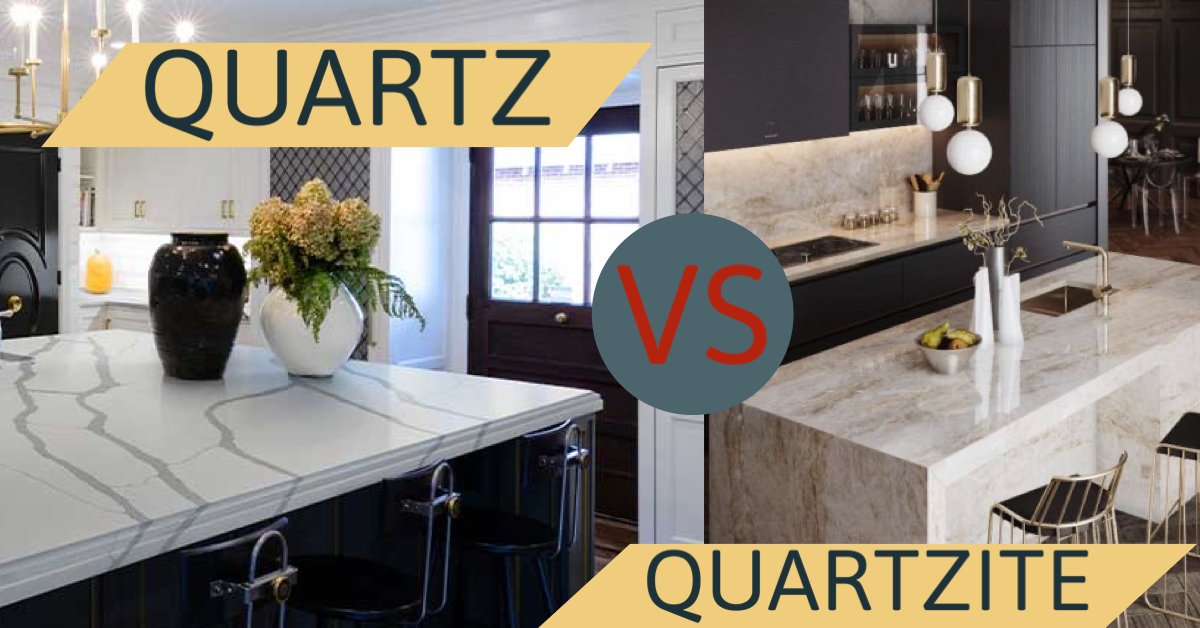
Taj Mahal quartzite has become one of the most-requested natural stones in our Columbus showroom — and for good reason. It delivers the soft look of marble with the toughness of quartzite, which is a rare combination. Named after India’s iconic monument, it brings that sense of understated grandeur into a working kitchen. As the largest countertop fabricator in Columbus, Ohio, we cut, seal, and install this stone every week, so this guide is written from hands-on experience: what Taj Mahal is, how it really performs, what it costs, and how to pair it — plus where engineered look-alikes like Taj Duna™ make more sense.
1. What is Taj Mahal quartzite?
- Marble-like elegance: a soft, luminous look with gentle veining, reminiscent of high-end marble.
- Granite-like strength: high hardness (Mohs ~7–7.5), so it resists scratching and etching better than marble and many granites.
- Versatility: a warm-neutral palette that works in modern, classic, or transitional kitchens. (Wondering if the look will date? See our take on whether Taj Mahal is outdated.)

2. What does Taj Mahal quartzite look like?
- Subtle, wispy veining: unlike the bold stripes of some marbles, Taj Mahal’s veins are feathery and soft. They give movement without overwhelming the eye. Cooler lots show hints of pearly silver; warmer lots show honey-gold accents.
- Neutral warmth: warm but not yellow — inviting yet clean. Some lots have tiny mineral flecks that catch the light.
- Finish options:
- Polished – the most common; high-gloss and reflective, which makes the veins pop.
- Honed – matte and smooth, for a softer, more subdued look.
- Leathered – a textured, low-sheen finish you can feel, adding a natural, tactile touch.
- Slight translucence: in lighter sections Taj Mahal can glow when backlit — a sign of its crystal-rich composition.

3. How durable are Taj Mahal countertops?

- Hardness & scratch resistance: Taj Mahal measures about 7–7.5 on the Mohs scale, harder than most granites. Normal use won’t scratch it — though we still recommend a cutting board, since cutting directly on stone dulls your knives.
- Heat resistance: formed under heat, quartzite tolerates brief contact with hot cookware better than laminate or some quartz. That said, always use trivets to avoid thermal shock at the seam or edge — we explain the limits in is quartzite heat resistant?
- Chip & impact resistance: dense and strong; less likely to chip than softer marble or soapstone. As with any stone, edges and corners are the most vulnerable points.
- Etch resistance: this is the big one. Etching is the dull mark acids leave on calcite stones like marble. Because Taj Mahal is mostly silica, it’s highly resistant to acids. In fabricator-run tests documented in the industry — including a local Columbus test that left lemon juice, vinegar, and ketchup on a Taj Mahal sample for up to 15 hours — no etching occurred, where marble would have dulled badly. In fact, the lemon-juice test is how fabricators verify a stone is real quartzite: true quartzite won’t react. (We’re happy to demonstrate this on a remnant in our showroom.)
- Stain resistance: Taj Mahal is one of the denser quartzites, but it’s still natural stone and porous to a degree. Sealed slabs resist red wine, coffee, and oil well even after extended contact in documented tests; unsealed stone can absorb over time. Wipe spills promptly and it stays low-maintenance.
4. How much does Taj Mahal quartzite cost?
- Installed cost range: on average, Taj Mahal runs roughly $90 to $150 per square foot installed, depending on region, the specific slab, and project complexity. At Distinctive Kitchen, it sits in our upper pricing tier (around $99/ft² installed for standard lots), though exceptional slabs and complex jobs run higher. For a fuller local breakdown, see the true cost of quartzite countertops in Columbus.
- What drives the price:
- Rarity: quarried in limited regions; high worldwide demand.
- Slab size: large formats mean fewer seams but cost more.
- Thickness: 3cm is standard for kitchens and costs more than 2cm; most jobs use 3cm for strength and edge options (more in 2cm vs 3cm thickness).
- Finish & fabrication: honed or leathered finishes, ornate or mitered edges, full-height splashes, waterfall ends, and careful vein-matching all add labor (see choosing an edge profile).
- Install complexity: farm-sink cutouts, cooktop cuts, and lots of corners or seams add time.

5. Taj Mahal alternatives: quartz look-alikes and other options
Because Taj Mahal is so popular, several engineered quartzes emulate its look. These are man-made (about 90–95% ground quartz plus resins) and never need sealing — a real advantage for some households. The closest matches:
Taj Duna™ (Viatera quartz): a premium quartz by LG Viatera designed specifically to echo Taj Mahal — creamy-beige base with light golden-brown veins, carried through the body of the slab so the pattern continues at edges. Side by side, it’s strikingly close. It’s also less expensive, roughly $60–$90/ft² installed (around $75 at Distinctive). If you want a predictable, uniform pattern with zero maintenance, this is the pick — see our full Taj Duna review.
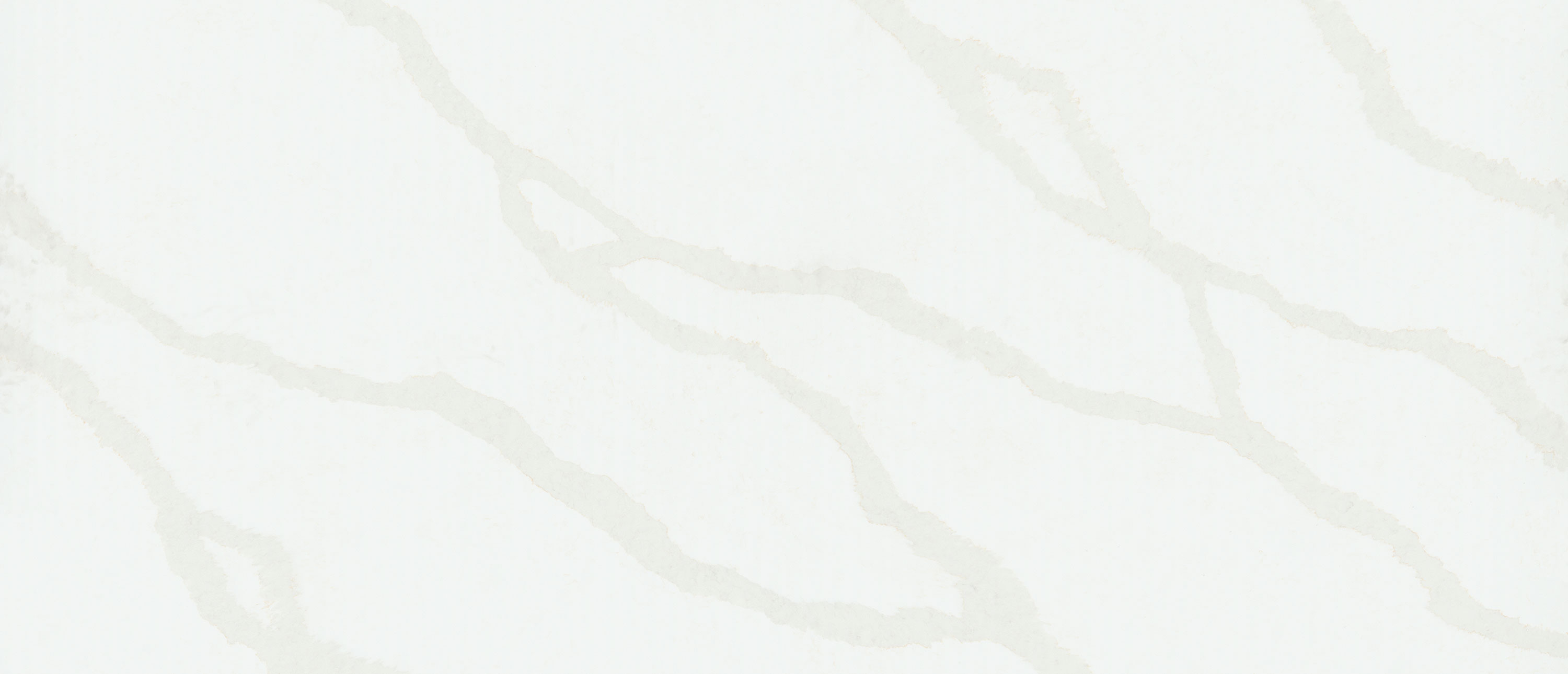
Calacatta-style quartz: not made to copy Taj Mahal, but similar in spirit — a white or off-white base with veining, usually cooler or bolder than Taj Mahal’s gentle beige. Brands like Silestone, MSI, and Cambria all offer versions, typically $70–$120/ft² installed. Browse our 5 best Calacatta quartz colors to compare.
If your heart is set on the natural-stone look but you’re weighing it against marble, it’s worth reading marble countertop costs in Columbus for a side-by-side on price and upkeep.
6. What cabinets and backsplashes pair well with Taj Mahal?
Cabinet color ideas
- Classic white / off-white: white cabinetry creates a bright, timeless look and picks up the stone’s lighter tones. Off-white, ivory, or cream echoes its warmth for a soft, cohesive scheme.
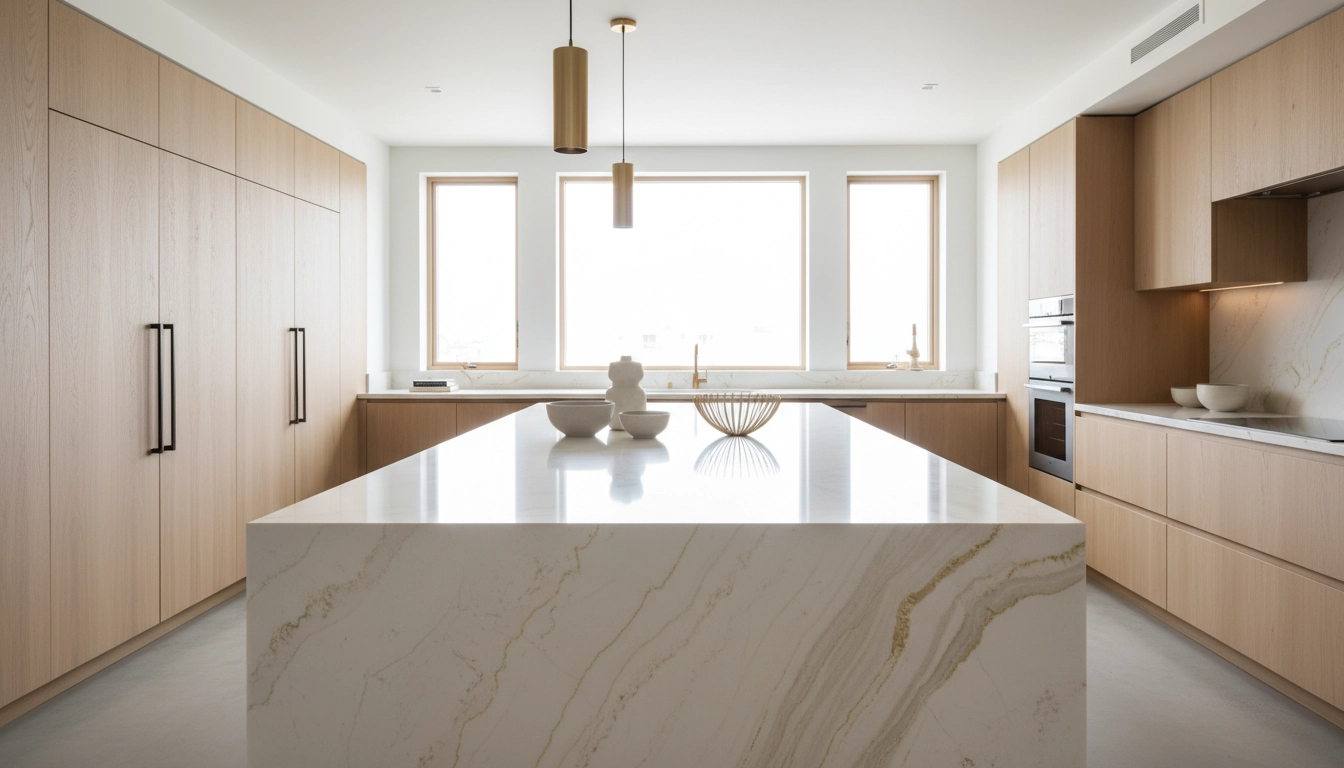
- Natural wood: white oak, maple, birch, or walnut create an inviting, organic feel; the warm beige in the stone complements the wood. Flat-panel white oak plus Taj Mahal reads Scandinavian-modern.
- Two-tone: a dark espresso or navy island under Taj Mahal with lighter perimeter cabinets makes the creamy stone pop and draws the eye to the island.
- Gray / greige: warm grays pull out the stone’s gray undertones. Stick to greige rather than cool bluish grays, which can fight the stone’s warmth.
- Deep colors: charcoal, forest green, or black cabinets create a dramatic, luxurious contrast. Add brass or gold hardware to echo the gold veins.
Backsplash ideas
- Matching slab backsplash: running Taj Mahal up the wall gives a seamless, high-end look with few grout lines. Our fabricators vein-match counter to backsplash so it reads as one continuous sheet.
- Classic subway tile: white (or warm off-white/beige) subway tile is a clean, cost-effective backdrop that lets the counter star.
- Neutral mosaic: a Carrara herringbone or beige arabesque adds texture; keep to neutral tones so it doesn’t overpower the stone.
- Soft glass tile: champagne, ivory, or light greige glass adds subtle shine and brightness.
- Accent: a small run of patterned or brass tile behind the range adds personality — use sparingly.
Flooring ideas
- Hardwood: mid-tone oak or hickory pairs naturally; lighter woods keep things airy, darker woods add richness and contrast.
- Luxury vinyl plank: a warm gray or soft-brown wood-look LVP with greige tones ties in nicely and is budget-friendly.
- Stone or porcelain tile: beige/cream porcelain, honed travertine, or light limestone echo the counter’s tones. Avoid busy tiles with clashing (e.g. reddish) undertones.
Browse current slabs, get an instant installed price, and visualize the stone in your space — no commitment. Or visit our Columbus showroom to see (and test) it in person.
Get my Taj Mahal quote → Explore all quartzite